Buying Caviar
The ultimate guide to luxury taste and quality
What exactly is caviar?
Caviar is one of the most exclusive delicacies in the world. It consists of salted sturgeon roe — an ancient species of fish that has existed for millions of years. The sturgeon lives primarily in the Caspian and Black Seas and provides the most highly-valued types of caviar in the world.
Although the word “caviar” is often used loosely, only the product derived from sturgeon may officially be called caviar. Other fish eggs, such as those from salmon or trout, are typically sold as “imitation caviar” or “fish pearls”.
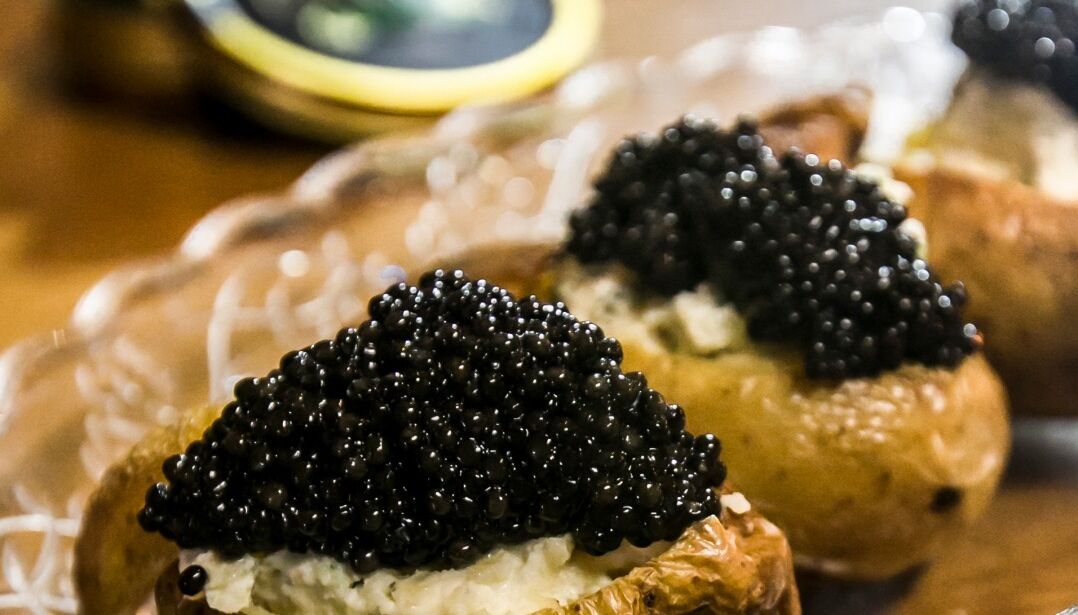
True caviar distinguishes itself by its creamy texture, subtle briny taste, and the characteristic “pop” you experience when a grain bursts in your mouth.
The origin of caviar: from sturgeon to delicacy
For centuries, caviar was regarded as the food of tsars, kings and aristocrats. The traditional production took place in Russia and Iran, where wild sturgeons were caught in the Caspian Sea. Today, trade in wild sturgeons is strictly regulated to prevent extinction.
Most of the caviar on the market today comes from sustainable aquaculture. Here, sturgeons are farmed under controlled conditions and only harvested when they are ripe enough to produce high-quality roe.
This modern approach not only guarantees the quality of the product, but also contributes to the preservation of this special species.

Types of caviar you can buy
There are different types of caviar, each with their own taste, colour and texture, including the following:
Beluga caviar – The king among caviar types
Beluga caviar is the most exclusive and expensive variety. The eggs are large, silver-grey and have a buttery, nutty flavour. They melt on the tongue and are often regarded as the ultimate luxury.
Ossetra – A popular alternative
Ossetra caviar has a slightly firmer texture and a richer, more earthy taste.
Platinum – Melts on the tongue
Platinum caviar is one of the most exclusive types. It is often produced from older sturgeons, so the eggs are larger and riper. The texture is creamy and soft.
Discover even more caviar varieties in our webshop!


Where can you buy caviar in Belgium and the Netherlands?
Buying caviar in Belgium and the Netherlands is easier than ever today. There are many specialist delicatessens offering our high-quality caviar.
Buying caviar online – what to look out for?
If you buy caviar online, pay attention to some important things. Always choose a webshop that clearly states where the caviar comes from, has a valid CITES certification, and delivers via controlled refrigerated shipping. Also check whether the webshop has experience with luxury delicacies and can show positive customer reviews.
Buying caviar in-store
In larger cities such as Antwerp, Brussels, Ghent, Amsterdam and Rotterdam you will find delicatessens that offer fresh caviar. Exclusive department stores often also carry a selection of premium caviar. Furthermore, some specialised fish shops and caterers offer high-quality caviar, often from recognised producers.
How to recognise genuine caviar?
You can recognise genuine caviar from the packaging, structure and taste. The grains must shine, stay separate from each other, and have a soft briny aroma. Avoid products that are too salty or too grainy.
The role of CITES certifications
Every legal caviar package has a CITES label (Convention on International Trade in Endangered Species). This certificate ensures that the caviar has been legally and sustainably produced.

How much does caviar cost on average?
The price of caviar varies widely. On average you pay:
| Type | Price per 30 g |
|---|---|
| Beluga | €150 – €250 |
| Osietra | €60 – €150 |
| White Pearl | €70 – €100 |
| Platinum | €50 – €100 |
| Gold Label | €40 – €80 |
Why is caviar so expensive?
The high price is due to the long growth period of the sturgeon (sometimes more than 10 years), the labour-intensive processing and the limited availability of high-quality eggs.

How to store and serve caviar correctly?
Caviar must be stored chilled at a temperature of 0–4 °C and consumed within a few days after opening.
Serving caviar like a professional
Always use a mother-of-pearl spoon or a plastic spoon to prevent oxidation. Serve caviar on ice with toast, blinis or crème fraîche, and pair it with champagne or vodka for a true luxury experience.
Health benefits of caviar
Although caviar is often seen as a luxury product, it also offers surprisingly many health benefits. This delicacy is rich in essential nutrients that contribute to a healthy body and mind.
Caviar is packed with omega-3 fatty acids, which help lower cholesterol and support healthy heart function. In addition, the fish eggs contain many vitamins (A, D, E and B12) which are important for a strong immune system, healthy skin and the production of red blood cells.
Moreover, caviar contains selenium, zinc and iron — three minerals that are crucial for energy metabolism and cell protection. Thanks to this unique composition, caviar (when eaten in moderation) can contribute to a balanced diet.
Nevertheless, it is important to remember that caviar also contains a relatively high amount of salt. Therefore, for people with high blood pressure it is advisable to enjoy this delicacy in moderation — preferably as part of a festive occasion.
Sustainable caviar: responsible indulgence
In the past the trade in wild caviar was problematic. Due to over-fishing, wild sturgeon populations fell drastically. Fortunately, there are nowadays numerous initiatives focussing on sustainable caviar production.
Sustainable caviar comes from sturgeons that are farmed in aquaculture. These methods ensure controlled conditions in which the fish are not caught in the wild, but raised in clean, natural waters. That way the sturgeon can spawn its eggs without endangering the population.
Frequently asked questions about buying caviar
1. How long does caviar remain good?
Unopened caviar, if properly chilled between 0–4 °C, can remain good for up to 6 weeks. After opening it must be consumed within 48 hours for optimal flavour and quality.
2. How do I serve caviar correctly?
Serve caviar chilled on ice, using a mother-of-pearl spoon to prevent oxidation. Pair with blinis, toast, crème fraîche or eggs. Champagne or vodka are classic drinks to accompany it.
3. What is the difference between genuine and imitation caviar?
Genuine caviar comes exclusively from sturgeon and carries a CITES certificate. Imitation caviar is made from other fish eggs (such as salmon or trout) and is typically cheaper and less creamy in taste.
4. Is caviar healthy?
Yes — if consumed in moderation. Caviar contains healthy fatty acids, proteins and vitamins, but also a lot of salt. A small portion provides a nutritious luxury experience.
5. How do I know if my caviar is sustainable?
Always check for the CITES label and origin information. Choose brands that are transparent about their production process and use aquaculture rather than wild catch.

Luxury, taste and responsibility when buying caviar
Buying caviar is more than simply acquiring a luxury product — it is an experience of flavour, tradition and refinement. By consciously choosing sustainable brands and reliable suppliers, you contribute to the preservation of the sturgeon and the environment, while enjoying a product that is synonymous with elegance.
Pure pleasure
Whether you opt for the exclusive Beluga, the accessible Gold Label or our White Pearl, the key lies in quality, origin and respect for the craft.
Caviar remains a symbol of luxury, but thanks to sustainable innovations it is now also a responsible choice.
Enjoy — with knowledge, class and compassion.